


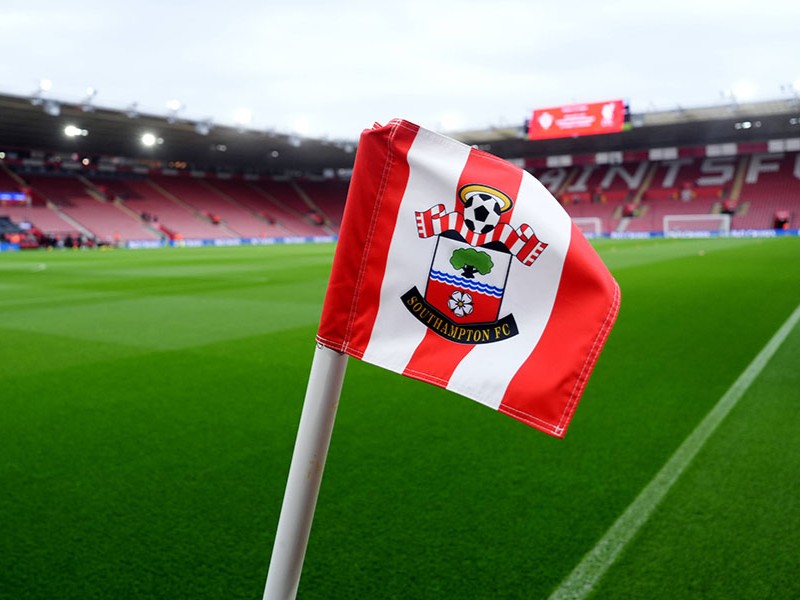
Southampton has asked for additional time to complete an internal investigation after being charged by the English Football League over allegations of spying on Championship playoff opponents Middlesbrough. The EFL says the club breached regulations by observing, or attempting to observe, another team’s training session within 72 hours of a scheduled fixture while also failing to deal with a fellow club in the spirit of the utmost good faith.
Southampton has asked for additional time to complete an internal investigation after being charged by the English Football League over allegations of spying on Championship playoff opponents Middlesbrough. The EFL says the club breached regulations by observing, or attempting to observe, another team’s training session within 72 hours of a scheduled fixture while also failing to deal with a fellow club in the spirit of the utmost good faith.
The accusation stems from claims by Middlesbrough that a Southampton staff member was discovered watching and filming a training session at Rockliffe Park on Thursday, just two days before the sides played out a goalless draw in the first leg of their playoff semi-final at the Riverside Stadium.
Southampton have not denied the claim at any point. Manager Tonda Eckert added to the scrutiny after leaving his post-match press conference on Saturday when repeatedly questioned about whether he had instructed a performance analyst to attend the Boro session.
Under standard procedure, Southampton would usually be given 14 days to answer the charges. However, because the EFL has requested the independent disciplinary commission hold a hearing as quickly as possible, the timeline could be accelerated ahead of Tuesday’s second leg at St Mary’s.
The case has created major uncertainty around the promotion race, with Southampton due to host Middlesbrough in the return match before the winner potentially faces Hull City at Wembley on 23 May.
Saints' chief executive Phil Parsons said the club is fully cooperating with both the EFL and the disciplinary commission while also carrying out a thorough review to ensure all circumstances are properly understood. He stressed that, because of the demanding schedule and limited time between fixtures, Southampton had requested more time to establish the full picture responsibly.
Parsons also acknowledged the public reaction surrounding the matter but argued conclusions should not be reached before all details are clarified.
With the play-off final scheduled before the usual 14-day response period would end, the urgency of the process has increased significantly.
The independent disciplinary commission has broad authority when deciding Southampton’s fate. Possible outcomes range from a financial penalty to point deductions or even expulsion from the playoffs altogether.
Because the EFL itself does not determine the punishment, it has sought an early hearing to avoid prolonged uncertainty, especially given that appeals could further complicate the promotion picture.
Should Southampton eventually secure promotion, a points deduction presents another layer of complexity. While the EFL cannot directly enforce sanctions in the Premier League, it can recommend action, leaving the Premier League board to decide whether any punishment would apply in the following campaign.
For Middlesbrough, any lesser sanction than removal may raise questions if Southampton were to benefit competitively after the alleged breach.
The most notable English example came in 2019, when Leeds United were fined £200,000 after a staff member was caught acting suspiciously outside Derby County’s training ground before a match.
That case differs because, at the time, there was no specific rule banning such conduct. Leeds was charged only under good faith regulations, whereas Southampton now faces action under both that principle and rule 127, which was introduced afterward to explicitly prohibit attempts to watch opponents train in the days before a game.
The timing of the alleged Southampton incident, occurring before a high-stakes play-off tie rather than a regular league fixture, could potentially be viewed as more serious.
Much may depend on exactly what was observed, recorded, or communicated, along with how much senior coaching staff knew, although such details may only affect mitigation rather than eliminate responsibility.
Football has also seen similar controversies beyond England. At the 2024 Olympic women’s tournament in Paris, Canada was docked six points by FIFA after spying on New Zealand with a drone.
FIFA also suspended three Canadian staff members, including the head coach, from football for one year.
That example highlights how governing bodies can impose severe sporting consequences when surveillance breaches competitive integrity, adding further weight to Southampton’s current situation.


