


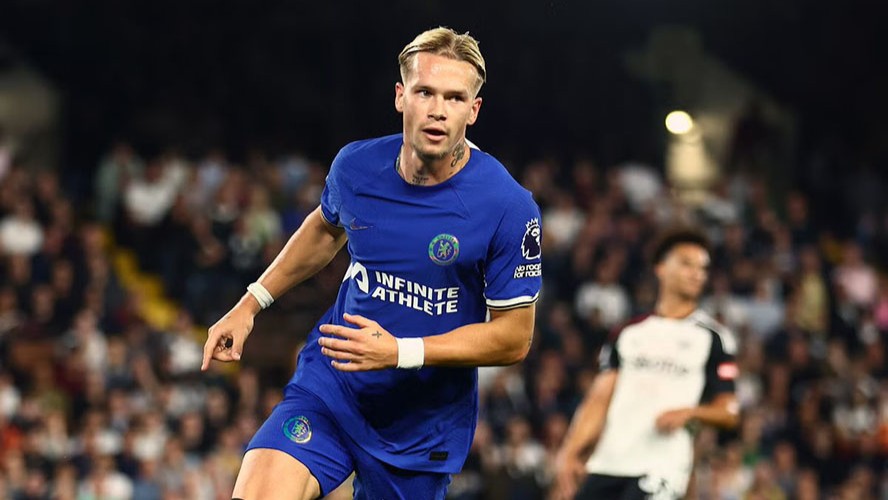
The revelation that Mykhailo Mudryk is contesting a four-year suspension came as a surprise to many, largely because the decision had never been publicly disclosed. The Football Association imposed the sanction following an adverse result in a routine urine sample, yet details remained undisclosed until the Court of Arbitration for Sport confirmed the player had lodged an appeal.
The revelation that Mykhailo Mudryk is contesting a four-year suspension came as a surprise to many, largely because the decision had never been publicly disclosed. The Football Association imposed the sanction following an adverse result in a routine urine sample, yet details remained undisclosed until the Court of Arbitration for Sport confirmed the player had lodged an appeal.
According to reports, the punishment was issued in January, but only a limited group within the player’s circle and a small number of individuals at his club were informed. This approach reflects the FA’s strict confidentiality rules surrounding anti-doping cases, where every stage — from testing to legal discussions — is handled privately to protect player privacy.
The FA works alongside UK Anti-Doping in administering this programme, and its policies allow sensitive data to be shared only with specific bodies such as governing organisations or law enforcement when necessary. Public disclosure typically occurs only after the entire process, including appeals, has concluded.
As a result, cases often become known externally only when a player’s absence raises questions, rather than through formal announcements at an early stage.
The governing body has not officially identified the substance involved, although it is understood to be meldonium, a drug associated with improving endurance and respiratory performance. The player is believed to have come into contact with it while representing his national team.
Authorities in Ukrainian football have stated they are not directly involved in the matter and are unable to comment due to confidentiality agreements. They confirmed cooperation with the player’s legal team but emphasized that no formal requests had been made to them by international anti-doping bodies or the FA.
How the substance entered his system has not been clarified. Meldonium has been prohibited since 2016 and is commonly used in some regions to treat heart-related conditions. Its presence in sport has drawn attention before, including notable cases where athletes tested positive after its ban came into effect.
The uncertainty surrounding the source of the substance remains a key aspect of the case as it moves through the appeals process.
The winger has been unable to play for club or country since receiving a provisional suspension 16 months ago. Despite this, he remains under contract until 2031, having signed a long-term agreement following his transfer in 2022.
If the ruling is upheld, he would not be eligible to return until around December 2028, marking four years from the initial suspension. However, a reduced penalty could allow a much earlier comeback, with some close to the situation suggesting a return could happen as soon as next season.
The club has several options depending on the final verdict. It could terminate the agreement, as anti-doping violations are typically considered breaches of contract, which would also remove remaining financial obligations from its accounts. Alternatively, it may retain the player, continue paying his wages, or seek a transfer fee by selling him.
During the suspension, he cannot participate in matches or train with teammates, limiting his involvement with club facilities. Instead, he has been working individually with a personal coach at external venues and maintaining fitness independently while remaining in London.
The appeal was formally submitted to the Court of Arbitration for Sport on 25 February. Based in Switzerland, the court acts as an independent authority for resolving sporting disputes and will reassess the case through a panel of arbitrators.
These officials will review evidence, hear testimony if necessary, and decide whether to confirm, overturn, or adjust the original sanction. Proceedings are conducted privately, with a final decision delivered after careful consideration.
Timelines for such cases can vary. A previous example saw a high-profile player’s four-year suspension reduced after an appeal, with several months passing between submission, hearing, and verdict.
Mudryk’s situation now rests on this process, which will ultimately determine both the length of his absence and the next stage of his professional career.


