


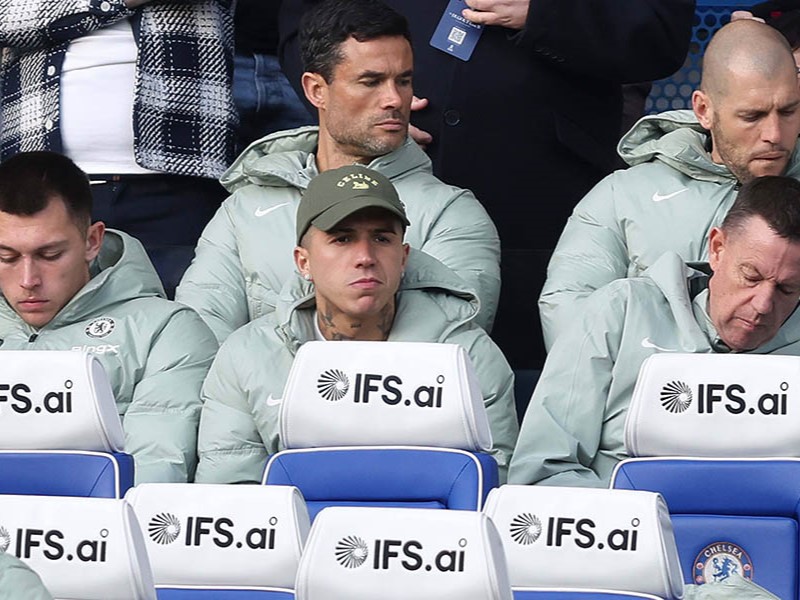
Enzo Fernandez created uncertainty around his Chelsea future while away with Argentina, making comments shortly after arriving in Buenos Aires that raised eyebrows inside the club. His appearances in media interviews, including a YouTube discussion and a television segment alongside his partner, included remarks about wanting to live in Madrid and admiration for a former Real Madrid midfielder.
Enzo Fernandez created uncertainty around his Chelsea future while away with Argentina, making comments shortly after arriving in Buenos Aires that raised eyebrows inside the club. His appearances in media interviews, including a YouTube discussion and a television segment alongside his partner, included remarks about wanting to live in Madrid and admiration for a former Real Madrid midfielder.
Those statements quickly became a source of concern for Chelsea’s leadership, particularly given Fernandez’s status within the squad. The timing and public nature of his comments intensified their impact, coming at a moment when the club was already dealing with on-field struggles and growing external criticism.
The situation escalated further as the midfielder’s comments were interpreted internally as crossing an acceptable boundary. Although he avoided explicitly naming a club he wished to join, the tone and context of his remarks were enough to trigger a response from the hierarchy.
Chelsea acted decisively by issuing Fernandez a two-match internal suspension, ruling him out of fixtures against Port Vale and Manchester City. The decision was made collectively by head coach Liam Rosenior and the club’s sporting directors, with full backing from ownership figures.
This moment represented a key early test for Rosenior, who took charge in January following a breakdown in relations between his predecessor and the same leadership group. Taking firm action against a senior player signalled a clear intention to establish authority and reinforce standards within the squad.
The club also wanted to avoid any perception of preferential treatment. Fernandez’s role as a high-profile figure made the decision particularly significant, as Chelsea aimed to demonstrate consistency in how discipline is applied across the team.
Marc Cucurella was also involved in the wider situation after publicly criticising aspects of Chelsea’s transfer approach. However, unlike Fernandez, the defender did not face disciplinary action following internal discussions.
The key difference lay in his response. Cucurella was seen as genuinely remorseful for not addressing concerns privately before speaking publicly. He also reaffirmed his commitment to the club after being questioned about a possible return to his former side.
Chelsea viewed his reaction as constructive, particularly after he engaged in conversations about the club’s long-term direction. Those discussions, including plans for the upcoming transfer window, helped reassure both the player and the leadership group.
Despite the disciplinary action, Rosenior has worked to maintain a stable relationship with Fernandez. The midfielder has continued to train with the first team, and there has been no move to strip him of his leadership responsibilities.
Publicly, Rosenior has played down any tension, indicating that the situation between himself and the player is not as strained as it may appear. He has also avoided escalating matters by responding to external criticism from Fernandez’s representatives.
At the same time, the issue has added pressure ahead of upcoming fixtures. Fernandez’s absence, combined with injuries elsewhere in the squad, has forced Chelsea to rely on alternative midfield options in key matches.
The disciplinary episode has unfolded during a difficult spell for Chelsea on the pitch. A heavy defeat to Everton in the Premier League followed a damaging loss to Paris St. Germain in the Champions League, intensifying frustration among supporters.
These results have increased scrutiny on both players and management, while also amplifying the impact of internal issues. Comments from senior squad members about recruitment strategy have further contributed to a tense atmosphere around the club.
Chelsea remain engaged with their players regarding future plans, including potential signings and contract renewals. The leadership group sees this communication as essential in maintaining unity during a challenging period.
At the heart of the situation lies a financial dimension that could ultimately determine its resolution. Fernandez is believed to be seeking improved terms, and his representatives have indicated that contract discussions may be delayed until after the World Cup.
Chelsea, however, is in a strong position due to the length of his current deal, which runs until 2032. Any potential transfer would require a fee at least matching the significant amount paid to sign him, making a move difficult to facilitate.
The club’s incentive-based contract structure has also come into focus. While designed to benefit Chelsea, such agreements can lead to frustration among key players, particularly those tied to long-term deals with performance-related bonuses.
For now, the situation remains unresolved. Rosenior continues to rely on Fernandez’s contributions on the field while managing the broader implications off it, with a financial solution appearing the most likely path to ending the dispute.


