


Italy enter a transition era after Gennaro Gattuso leaves following World Cup qualification failure. Federation changes spark rebuild plans and search for next coach.
Italy’s failure to qualify for the 2026 World Cup has triggered a sweeping reset at the top. Head coach Gennaro Gattuso has now left his role by mutual consent. The decision comes just days after a painful playoff defeat and signals that Italy have entered a new period of transition.
The Azzurri now face a major rebuild both on and off the pitch.
Italy’s hopes of reaching the 2026 edition ended in Zenica with a 1-1 draw against Bosnia and Herzegovina. The tie went to penalties, where the Azzurri collapsed dramatically in a 4-1 shootout loss.
Gattuso’s side had shown promise earlier, including a composed semi-final win over Northern Ireland. However, they failed to maintain control in the decisive final play-off match. After taking the lead, Italy allowed Bosnia back into the game as the hosts forced the shootout with a late equalizer. Italy then struggled from the spot, missing key penalties under pressure. The shootout defeat extended a worrying trend. It confirmed a third consecutive World Cup absence for the four-time champions.
The last time Italy played at the tournament was in 2014. No previous winner has endured such a prolonged absence.
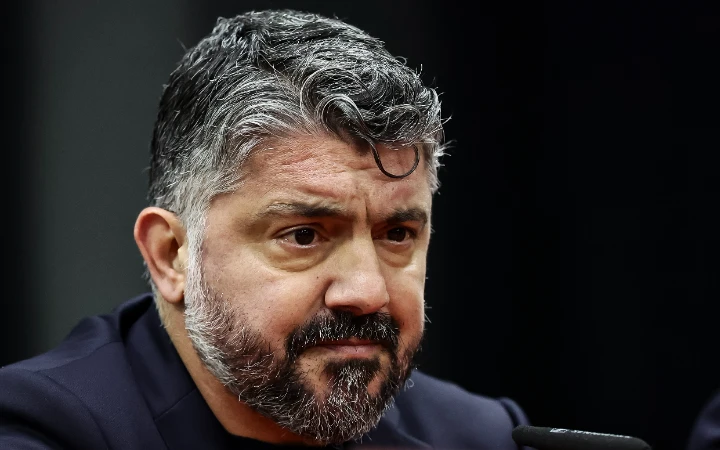
In the immediate aftermath, Gattuso cut an emotional figure. He apologised to supporters and accepted full responsibility for the failure. “With a heavy heart, I consider my time over,” he said. “The national shirt deserves a fresh direction.”
Gattuso had only taken charge in June, replacing Luciano Spalletti during the qualifying campaign. Despite winning six of his eight matches, the ultimate objective was missed. His departure was later confirmed as a mutual agreement with the federation. The decision was framed as a step toward rebuilding.
Gattuso admitted the failure was difficult to accept. He described the Italy job as an honour in his farewell message. The former midfielder also said stepping aside would allow fresh decisions. His departure was widely expected after the playoff loss.
Gattuso’s exit is part of a wider shake-up. Federation president Gabriele Gravina resigned shortly after the defeat. The pressure on leadership had intensified in recent months. Former goalkeeper Gianluigi Buffon also stepped down from his delegation role. Both cited responsibility for the failure. Their exits underline the scale of the reset now required.
An election for a new federation president is scheduled for June 22. That decision will shape the next phase of Italy’s rebuild.
Italy’s qualifying campaign had early promise under Gattuso. They won key matches but finished second in their group behind Norway. That forced them into the playoffs, where margins were thin.
They beat Northern Ireland in the semi-final to reach the final stage. However, defensive lapses and missed chances proved costly against Bosnia. The penalty shootout collapse summed up their struggles.
Confidence has been fragile since their Euro 2020 triumph as Italy have struggled with consistency and attacking output despite the squad still featuring quality talent. While that success offered hope, it has not translated into World Cup qualification. The inability to close out the decisive final game proved costly again.
Attention now turns to potential successors. Massimiliano Allegri is among the leading candidates, given his domestic success. His experience could bring stability to the national setup. Former boss Roberto Mancini is also being linked with a return. He guided Italy to European Championship glory and remains a popular figure.
Other names include Antonio Conte and Stefano Pioli. Each offers a different approach, from tactical discipline to player development.
Italy’s immediate focus shifts to friendlies in June, starting with a trip to Greece. Their next competitive fixtures come in September in the Nations League, beginning with a home game against Belgium.
The immediate focus will be restoring confidence and structure. With leadership changes underway, decisions in the coming weeks will be crucial.
Italy’s absence from another World Cup marks a historic low. The challenge now is to rebuild identity and return to the global stage. Whoever takes over inherits a historic team in transition. The challenge is not just qualification, but restoring identity and belief.


